
Here is a pretty simple list, in no particular order, of helpful things I’ve learned over the years that make things just go a bit more smooth in the chaos that can be figuring out a new recipe.
- Get your knives professionally sharpened once a year. It’s not too much to ask. It’s usually $1-3 per inch depending how bougie your knife place is. (Shout-out to Bernal Cutlery here in San Francisco). They may even show you how to properly hone your knives at home with a honing steel, which you should do once a week (shout-out to Williams-Sonoma, where I worked for a few years) You’ll thank me later.
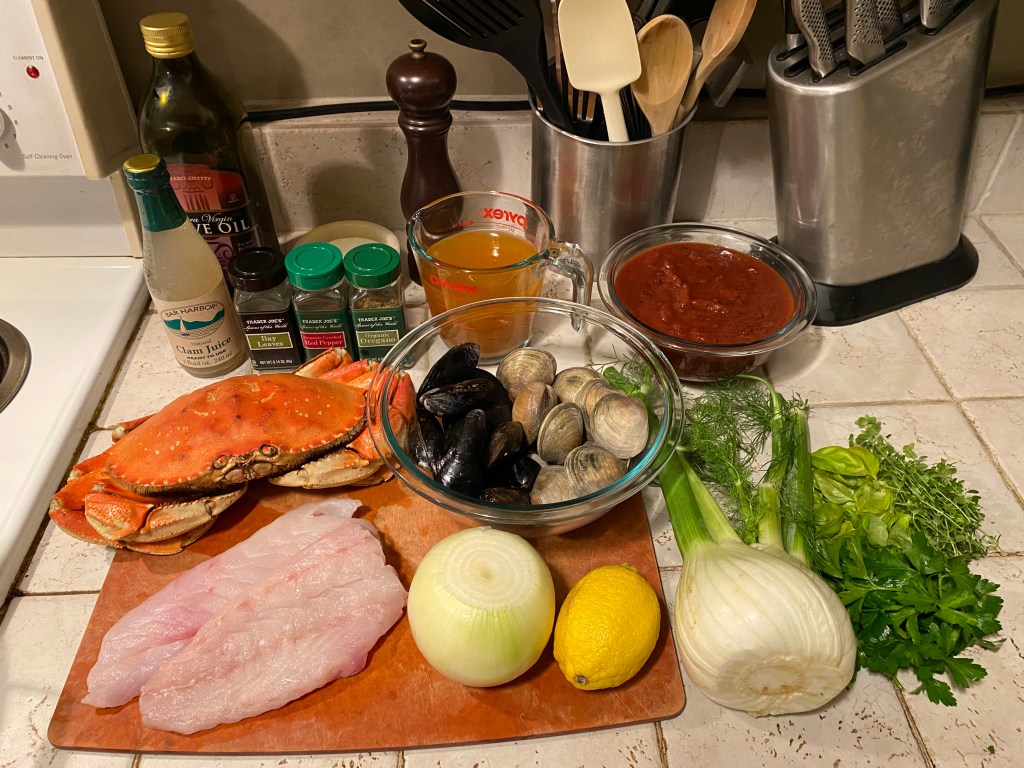
- Try to gather all of your necessary items and prepare everything in advance. The French call this “mise en place” (mees-on ploss). This translates roughly to “everything in it’s place.” It’s of the utmost annoyance when you find out halfway through a recipe that you forgot to buy those limes the last time you visited Joe the Trader (What I call Trader Joes). When you’ve got everything in front of you, prepped and ready to go, at least to me it’s great peace of mind and it makes everything more streamlined and easy to get going.
- Hey, let’s make sure you cook meat to their necessary temperatures. Nothing’s worse than undercooking chicken or overcooking steak. A simple way to do that is using an electronic meat thermometer. I happen to use a Lavatools Javelin and it works pretty well for me. Stick it in the thickest part of the meat and wait a few seconds. (Semi-Pro tip: Sometimes it doesnt turn on when extending the wand after washing. If this happens, remove the battery and let its guts dry out for a day. Try it again the next day which usually does the trick.)
- Here’s a little handy Quick Meat Temp Guide:
- Chicken Breasts: 165 to 170 F (74-77 C)
- Chicken Thighs/Dark Meat: Done at 165 F (74 C) but becomes paradoxically suuuper juicy at 185 F (85 C)
- Steak:
- Rare: 120 F to 130 F (49 to 54 C) (For those who idolize Liver King)
- Medium-Rare: 130 F to 140 F (54 to 60 C) (For those who earn my highest respect and are of the “learned class”)
- Medium: 140 F to 150 (60 to 66 C) (For those who still respect steak but like a slightly more firm texture)
- Medium Well and Well: I’m sorry, homie don’t play that.
- Pork Chops: See Steak
- Lamb: See Steak
- White Fish: 145 F (63 C)
- Salmon: 125 F (52 C)

- Everyone’s equipment will be different. Try to get to know your oven, stovetop, knives, pans, etc. Know if you have hot spots on your burners or what angle to hone your knives at. Maybe your oven is really 340 F when you set it to 350 F (Buy a $10 oven thermometer and stick it in there to check). A cook at a Michelin star restaurant I used to work at once told me every time he starts working in a new kitchen, it takes a while to get to know his new tools. With a little concentration and practice, you can do the same and it’ll show in your results.
- If, like me, you choose not to cook with wine, you can substitute wine with red or white wine vinegar. For example, if the recipe calls for 1 cup of red wine, instead, use 1/2 cup red wine vinegar and 1/2 cup water. Make sure the vinegar has been opened recently. If it’s been sitting in your cupboard for more than 6 months, get some new stuff, it’s usually pretty cheap.
