

California & New Mexico Chile Pork Stew – AKA: Some Kinda South-Western Wonderful
In the red corner, fighting out of Anaheim, California, coming in at an average of 1.6 ounces, is the Contender, not the Pretender…the Mild but Wild…the Anaheim Annihilator: Californiaaa…Chileee…Pepperrr!
In the blue corner, fighting out of Hatch, New Mexico, also coming in at an average of 1.6 ounces, is the High Desert Hitman…the Relleno Rectifier…the Best in the South-West, the one, the only, the legeeend: New Mexicooo…Chileee…Pepperrr!
Without having to pay Michael Buffer tens of thousands of dollars, I present to you not a “pepper punch out,” but a collaboration of two capsicum greats, the Anaheim and New Mexico chiles. The New Mexico chile, aka the Hatch chile, is the state vegetable (technically a fruit) of its namesake state. Known for its medium heat and versatility, it can be found in Enchiladas, Chile Colorado con Carne, and the venerable Chile Relleno.
The Anaheim Chile, also known as the California Chile, started its life as none other than a New Mexico Chile and was brought to southern California and cultivated there where it became a milder variant. The combo of the two gives you all the flavor of the chiles, but not all the heat if one were to use solely New Mexico chiles. If you’ve read my other recipes, you may be shocked that I actually don’t always want to go the hottest route. Heat without flavor is useless unless you’re a frat boy trying to impress your friends with the One Chip Challenge or some other nonsense. Although I love heat, if it’s not flavorful, you’re missing out on half the equation.
So, try not to get hit in the crossfire of these two dueling pugilistic peppers and get in the ring and get your flavor on!
Serving Size: 4-6…or 4 Mes
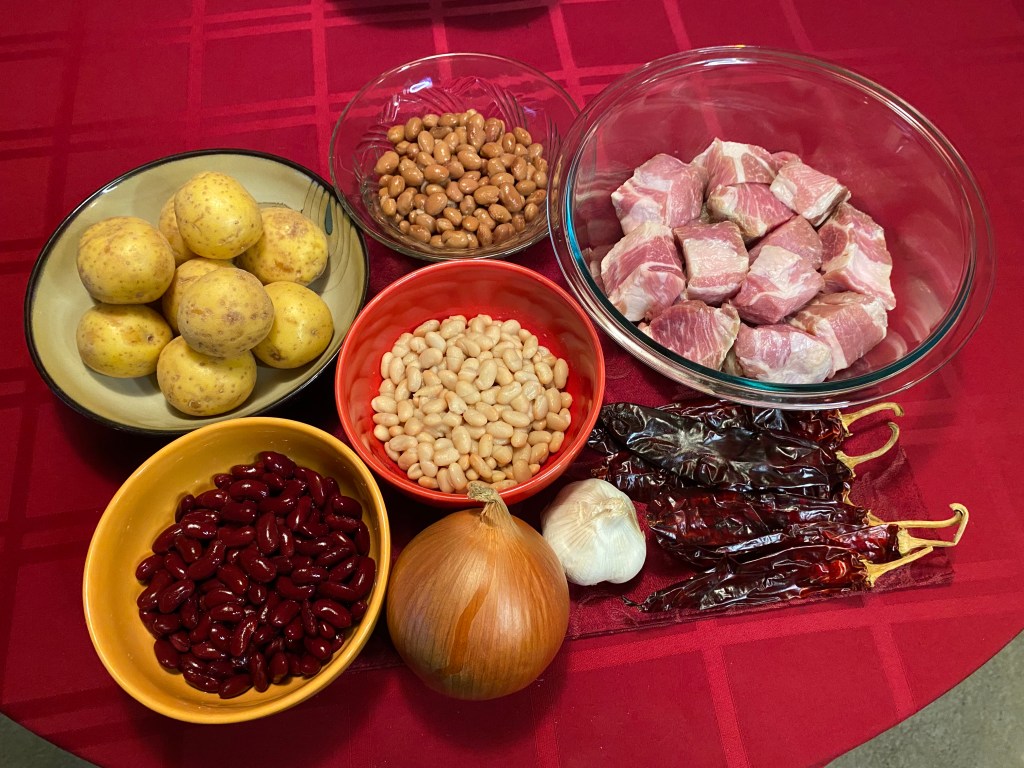
- 2 lbs. Pork Shoulder, 1 inch cubes
- 1.5 lbs. Gold Potatoes (~6 potatoes), 1 inch cubes
- 1 medium Yellow Onion, diced
- 4 Celery stalks, diced
- 2 medium Carrots, diced
- 6 cloves Garlic, minced
- 3 dried California Chiles (Anaheim)
- 3 dried New Mexico Chiles (Hatch)
- 15 oz can Pinto Beans, drained
- 15 oz can Cannellini Beans, drained
- 15 oz can Brown Beans, drained
- 2 tsp. Coriander
- 2 tsp. Oregano
- 1 tsp. Cumin
- 1 tsp. Paprika
- 2 Tbsp. Tomato Paste
- 2 Tbsp. Red Wine Vinegar
- 2 tsp. Beef Better Than Bouillon base (2 cups Beef Stock will do)
- Neutral Oil
- Kosher Salt, Sea Salt
- Black Pepper
1.) Carrot, celery, and onion, also known by the French as ‘mirepoix’ (meer-pwah) is my personal favorite stew base. When I get a scent of it sautéing in the pot, it gives me a feeling of great nostalgia of warming up after walking in from the snow, throwing my boots and jackets off in the mudroom and walking into a wonderful candlelit dining room with stew served on the table, or some other bullsh*t I just made up. I’m from San Francisco. We don’t have mudrooms and it definitely doesn’t snow.
Regardless, I really do like mirepoix, so let’s get dicing. Dice up your onion, carrots, and celery and put aside in a medium mixing bowl. This can take a while and many grocery stores give you the option of purchasing a package of some freshly cut up for you. I prefer to make life as difficult as possible, so I do it myself.

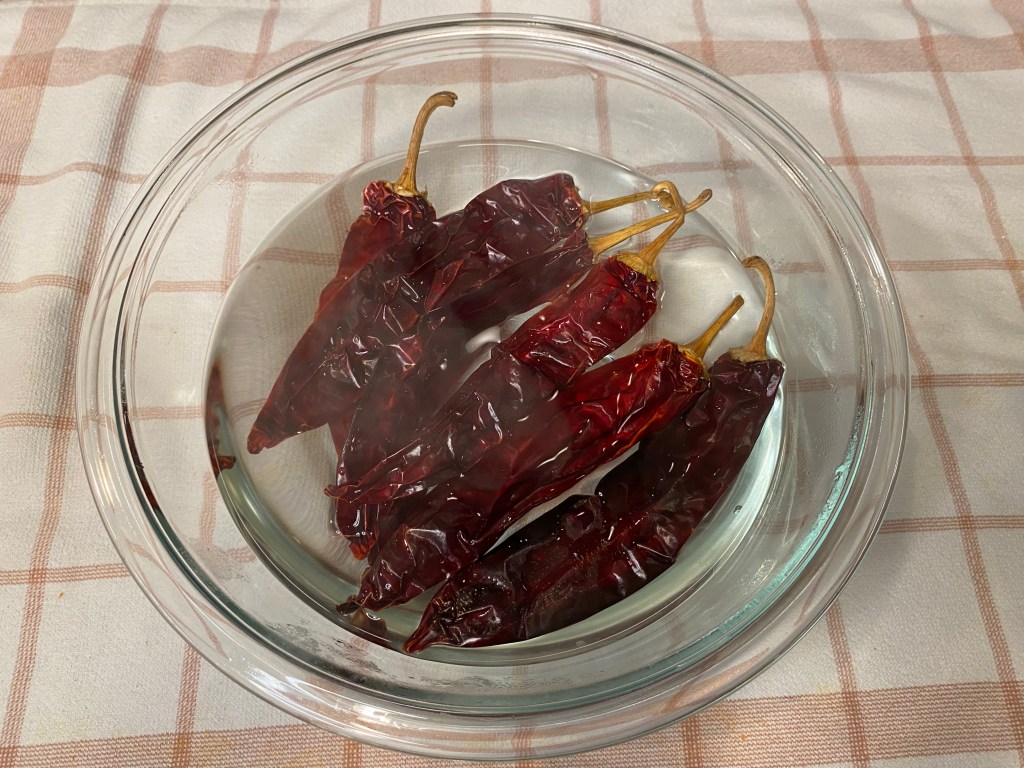
2.) The peppers are in the name of the recipe, so these must be pretty important. Since they are dried, you’re going to need to reconstitute them in hot water. Bring a kettle to very hot, but not boiling and pour 3 cups of said water into a medium mixing bowl. Leave your peppers in there for half an hour so they plump up.
For the beef stock, you have two options, and I hope you pick the latter. Either fill up two cups of boxed beef stock and pour it into you blender or food processor, or (preferred) take 2 cups of your pepper reconstitution water, add 2 teaspoons of Better than Bouillon base and stir until thoroughly mixed. Ad that and your (stemmed) peppers and blend. The water you used to reconstitute the peppers will give the stew an extra flavor “oomph.”
Blend it up into your blender or food processor until you only have small chunks of peppers left, and put it aside for later. Save the remaining 1 cup of reconstitution water for later as well. You MIGHT need it, maybe not.
3.) The main focal point of any good stew is the meat. Try to find the most well-marbled pork shoulder, also known as pork butt. I don’t know why pork shoulder is called the butt, but that’s the way it is. Maybe it’s like an Iceland/Greenland thing. The shoulder is so tasty, just like Iceland was a ‘tastier’ island to the Vikings over Greenland. Greenland was in fact very much less “green” than Iceland. So like the islands, the people that named pork parts wanted you to steer clear of that icky, poopy shoulder, fooling you and hoarding all the good pork shoulder (Iceland) for themselves.
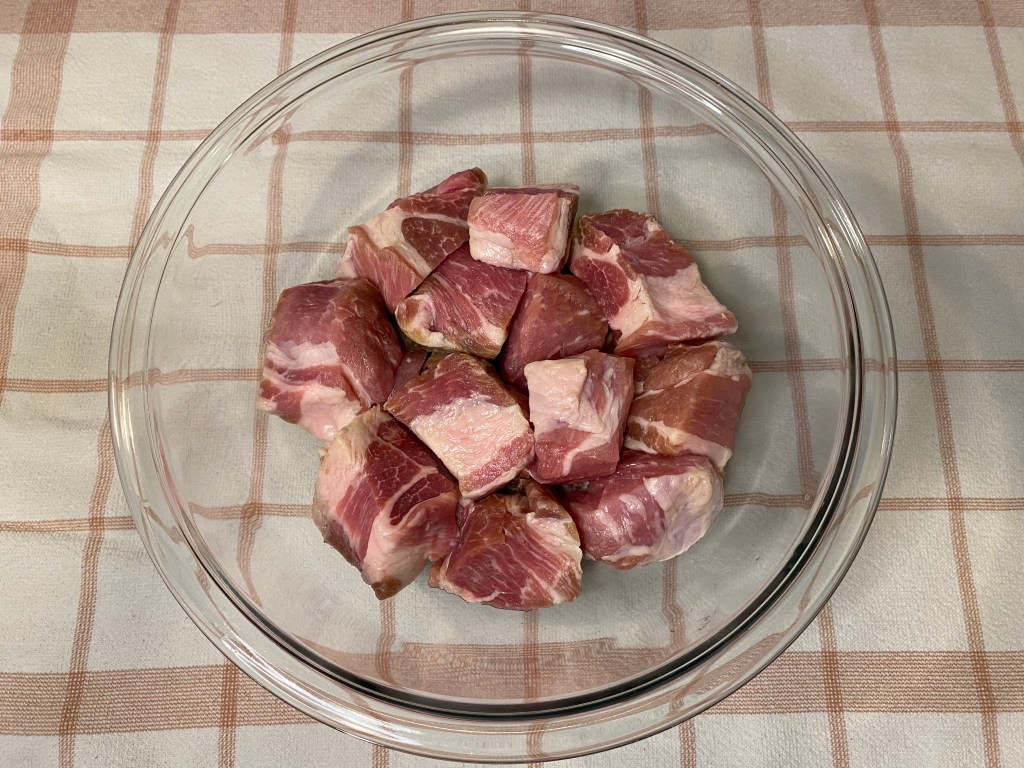
Ok, that was a waste of a paragraph, but you know how to NOT waste meat before you stew it? Dry it! You’ll want the meat to be as dry as possible before beginning to cook it so that it can brown very easily. Cube it first, then pat it dry with a mountain of paper towels. Once dry, put into a large mixing bowl and coat well with kosher salt and fresh ground black pepper and mix it up to make sure it’s nice and even.
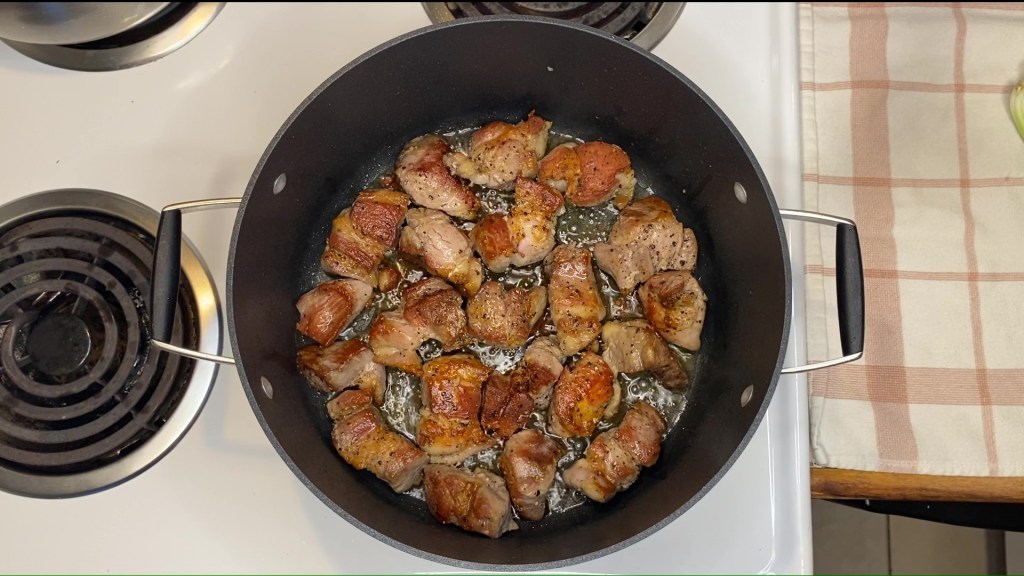
Preheat a stock pot or Dutch oven on ‘almost’ high at about 7-8/10. Add your neutral oil before adding your meat. Once the pot is hot and the oil isn’t burning, add your meat, and cook each side of the cubes (roughly 1 minute each side) until they are browned, but not blackened, to your liking. You are not fully cooking them through just yet. Once this is done, remove the pork from the pot and put back (with all the juices) into your mixing bowl.
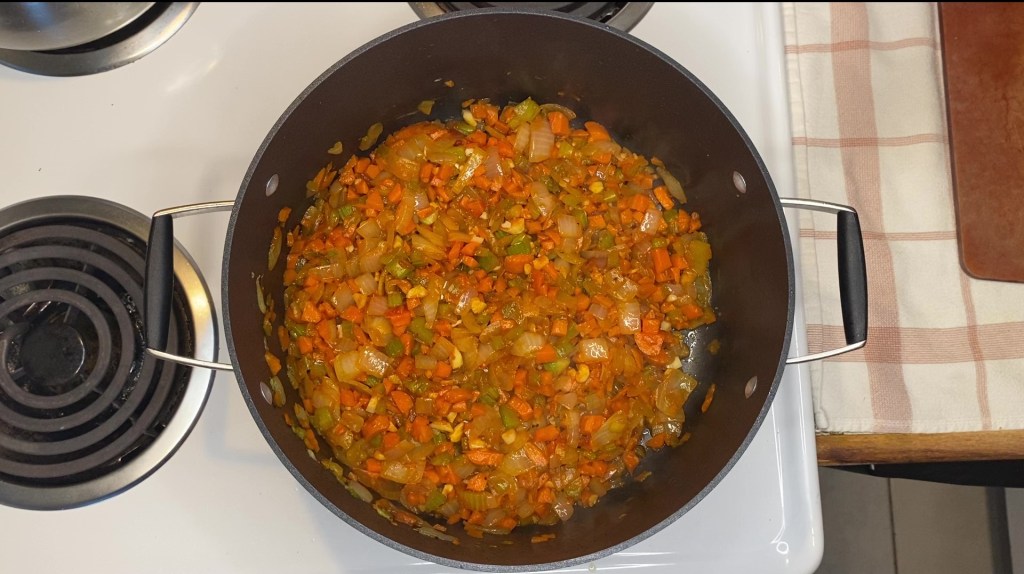
4.) Now you’re going to cook your mirepoix. Start by putting the heat back on to medium, let the pot warm back up a bit and add your neutral oil once more. Once that’s nice and toasty, drop in the diced onion. Let that cook for 5 minutes until nice and soft, stirring occasionally. Then add your carrots and celery and cook for another 5 minutes, again stirring occasionally. Lastly, you’ll add your tomato paste, garlic, spices, and red wine vinegar and stir those in until well integrated. The spices are just for a HINT of flavor as I don’t want to overpower the flavors from the blended peppers themselves, which is the whole freakin’ point of this recipe anyway. As a side note, you don’t want to cook your garlic for much longer than about 2 minutes because this will overcook the garlic and make them sweet instead of ‘garlicky,’ so make sure you move onto the next step quickly.
5.) Now you’re just going to be adding things that are ready to go. First, pour your peppery slurry in and stir. Then, add your browned pork and stir as well. Next, are your quartered potatoes, and guess what? Stir those too! This where you’re going to set and forget, and cook everything on low for half an hour, covered. You want to make sure it’s covered so you don’t cook off too much liquid. Don’t completely forget it because you’ll want to stir every ten minutes.
Once you return, it’s time to add all your beans. You want to add these later because cooking them for too long will turn them to mush, and you don’t want mushy beans. Cook everything together for 1 more hour on low, covered, but stirring occasionally. This is when you check to see if it’s done. Is the meat super tender? Do the potatoes and beans melt in your mouth? If the answers are yes and yes, you’re done. If not, keep going! The reason we saved an additional cup of peppery water from before is so you can add it to the stew since some of the liquid will evaporate from simmering. Use that reserve to replenish the stew over the course of simmering since it is more flavorful than regular water. The total simmering process should take somewhere between one and a half to two hours, depending on your stovetop’s heat.

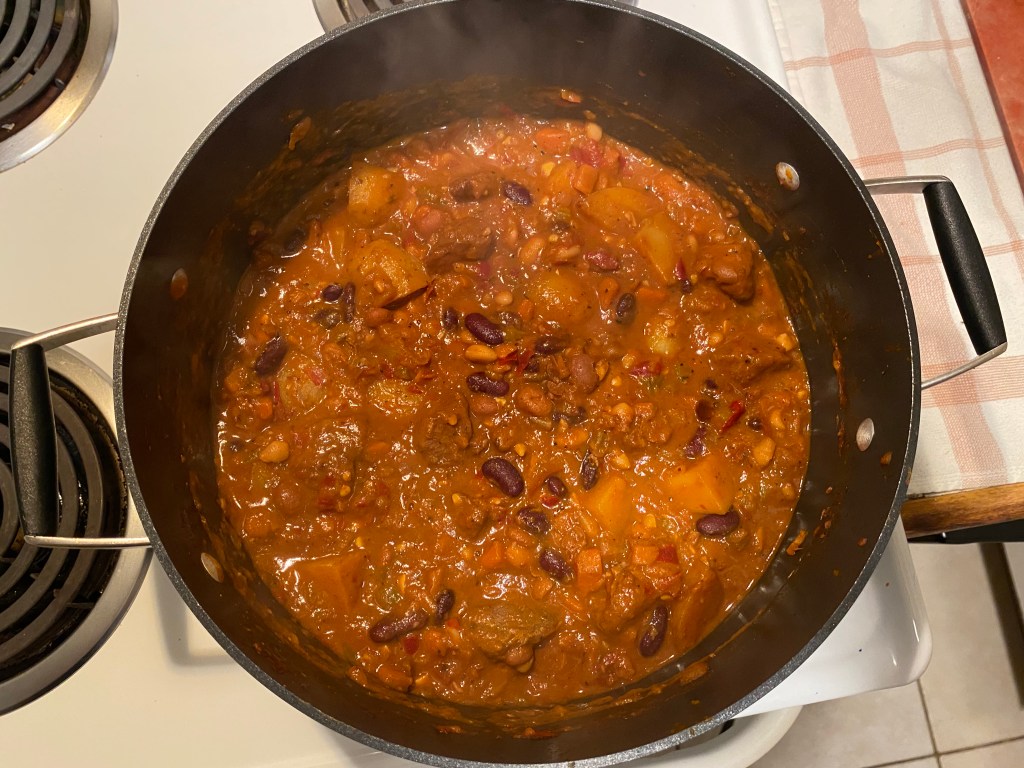
Hey, guess what? You’re pretty much done. If you feel it needs some more salt or even a spice or two, throw ’em in there. Like all soups, stews, and sauces, they all taste better when left for at least a few hours, but it definitely can be served immediately. Garnish with some sour cream, maybe some shredded cheese if you desire, and maybe a few late season serrano pepper slices from your luscious balcony garden that somehow grew into the end of November. Don’t just look at it though, eat it!



Leave a comment